
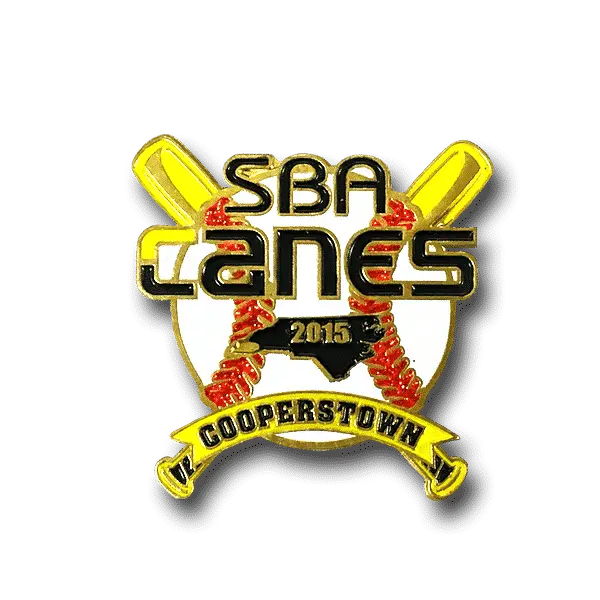
At The Pin Creator, we offer a variety of pin styles to suit our clients’ tastes and needs.
Depending on your design and how you envision the final product, choosing the right style can be an essential step to ensure your Cooperstown trading pins look their best.
Cooperstown trading pin styles. Two of the most popular styles we offer are die struck pins and offset printed pins. Although the names might sound similar, these styles differ in several ways — from production methods to pricing. Below, we break down both options so you can choose the style that works best for you.
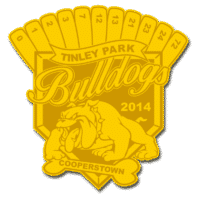
Die Struck Style Pins
This style comes in soft or hard enamel. To create these pins, we craft a mold from the artwork you provide for your order. Our manufacturers then make the mold from iron and electroplate it with one of four main coatings:
Nickel for a silver look
Dyed black for a black metal finish
Brass or gold for a gold tone
We fill the recessed areas with either soft or hard enamel paint, depending on the finish you want. Soft enamel paint creates textured ridges and recessed areas, giving the pin a classic, tactile feel. Hard enamel paint undergoes oven firing, hardening into a glass-like surface for a smooth, polished finish.
The hard enamel die struck pin — also called Cloisonné — requires PMS spot colors and thin base metal lines between colors so they don’t touch in the design. These pins feel heavier and slightly thicker than offset printed pins. In terms of cost, die struck pins are usually $0.10–$0.15 more per piece, and hard enamel pins can be $0.25–$0.30 higher than offset printed pins.
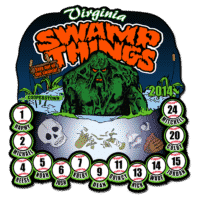
Offset Printed Style Pins
We make offset printed pins from stainless steel metal. Like die struck pins, we begin by creating a mold from your artwork. We then print the image directly onto the stainless steel and seal it with an epoxy coating, giving the pin a smooth feel.
Instead of PMS spot colors, this method uses CMYK color mixing, allowing colors to touch and gradients to appear in the same area of the design. Offset printed pins are slightly thinner and lighter than die struck pins due to the difference in materials. They also take 3–4 fewer days to produce and generally cost less.